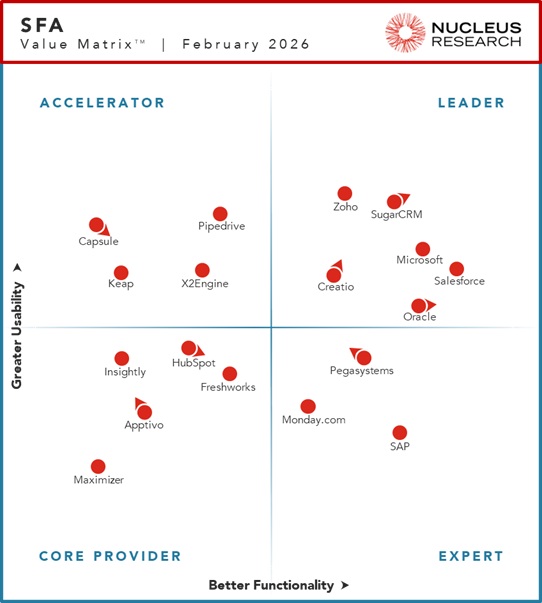
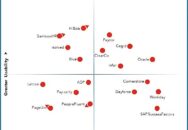
SFA Technology Value Matrix 2026
As sales organizations face increasing pressure to drive predictable growth with fewer resources, Sales Force Automation (SFA) platforms are evolving from systems of record into systems of execution. In 2026, SFA solutions play a central role in automating core sales activities such as lead and opportunity management, forecasting, territory alignment, and performance tracking, while increasingly embedding AI directly into day-to-day seller workflows. These platforms are no longer evaluated solely on their ability to track pipeline, but on how effectively they help sellers act on insights, maintain data quality, and progress deals with minimal friction. The most significant change shaping the SFA market this year is the increased adoption of agentic AI, which shifts automation from task-level assistance toward goal-oriented execution. Rather than simply surfacing recommendations or analytics, agentic capabilities enable SFA platforms to initiate follow-ups, prepare meetings, update records, and manage multi-step sales workflows with limited human intervention. When combined with improved data connectivity and workflow orchestration, these advancements are allowing organizations to shorten sales cycles, improve forecast accuracy, and scale selling capacity without proportional increases in headcount.