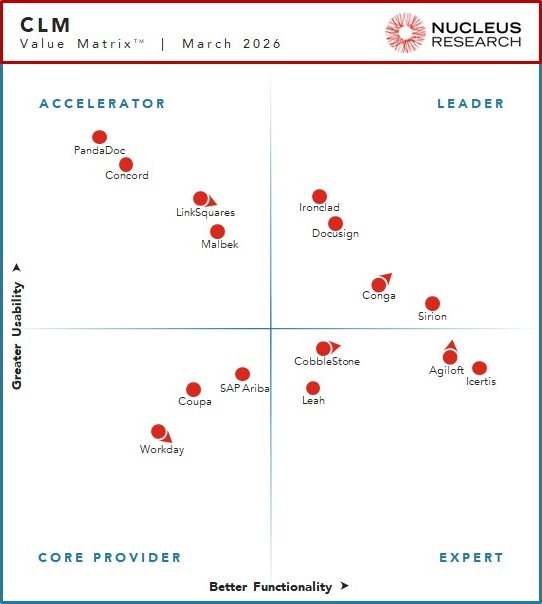
CLM Technology Value Matrix 2026
Contract Lifecycle Management (CLM) is evolving from a legal support system into a core operational platform as organizations face increasing pressure to manage risk, accelerate revenue processes, and enforce governance at scale. Fragmented, manual contracting environments, characterized by email-driven negotiations, inconsistent workflows, and poor visibility into obligations, are becoming operational liabilities that directly impact cycle times, compliance, and financial outcomes. In response, vendors are advancing beyond basic workflow automation to deliver AI-driven intelligence, structured data extraction, and deeper integration across enterprise systems. Capabilities such as AI-assisted drafting, automated approvals, and obligation tracking are enabling organizations to reduce contract cycle times while improving consistency and oversight. As regulatory complexity and vendor risk exposure increase, differentiation in the CLM market is shifting toward usability, data visibility, and the ability to operationalize contracts across the business. Organizations that invest in unified, intelligent CLM platforms are better positioned to reduce risk, improve execution, and capture measurable value from their agreements.