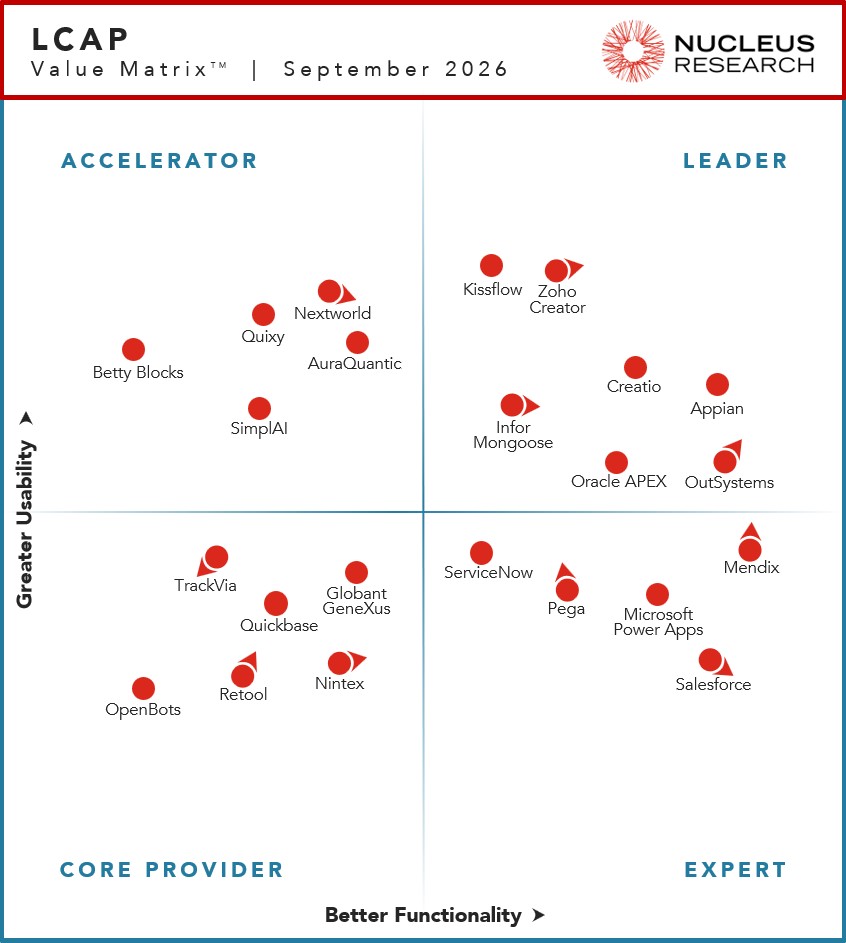
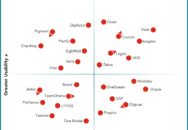
LCAP Technology Value Matrix 2026
The low-code application platform market is evolving beyond its historical focus on accelerating application development. Now, organizations increasingly use LCAP technology to support process automation, integration, enterprise application extension, and broader software delivery strategies. Vendors are approaching this opportunity from different starting points, including workflow automation, enterprise application development, process orchestration, citizen development, and application modernization. However, these categories are becoming less distinct as platforms expand across the application lifecycle. Customer adoption remains centered on measurable development economics, with organizations prioritizing faster delivery, lower reliance on specialized development resources, reduced integration effort, and lower long-term maintenance costs. At the same time, broader adoption is increasing the importance of application governance as organizations seek to expand development across business and IT teams without creating duplicate applications, unmanaged data access, security risks, or technical debt. As capabilities mature, the strongest platforms will be those that combine accessible development with reusable integration, centralized governance, and lifecycle management that enable organizations to move applications from ideas to production quickly without sacrificing control, scalability, or maintainability.