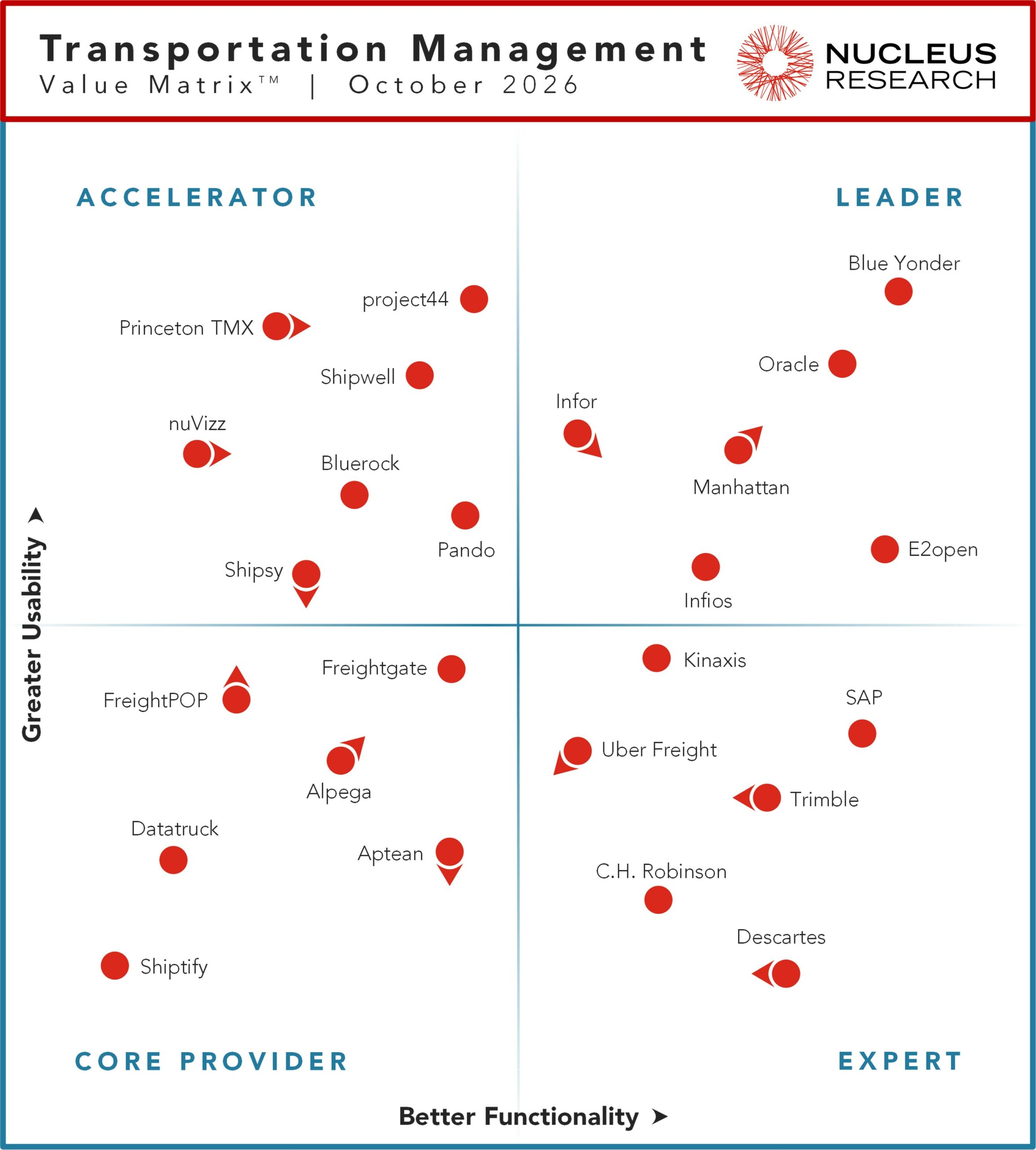
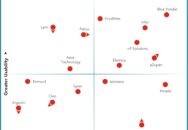
TMS Technology Value Matrix 2026
The transportation management system (TMS) market in 2026 continues to evolve as geopolitical uncertainty, shifting trade policies, rising operating costs, and increasingly complex supply chains pressure organizations to improve transportation efficiency, visibility, and financial control. Shippers, carriers, brokers, and logistics service providers are reassessing traditional transportation processes as changing fulfillment expectations, capacity constraints, and fragmented systems expose operational inefficiencies. TMS adoption is expanding across enterprise and small to midsize organizations, with customers seeking greater control over freight procurement, multimodal execution, network optimization, and transportation spending. In response, vendors are extending their platforms beyond traditional planning, tendering, and settlement toward connected transportation ecosystems incorporating real-time market intelligence, continuous optimization, and broader supply chain execution. Artificial intelligence is accelerating this transition through automated workflows, exception management, and increasingly autonomous decision-making, while natural language interfaces are transforming how users interact with transportation systems. Nucleus expects organizations to prioritize TMS investments that deliver measurable ROI through reduced freight costs, improved asset and labor utilization, stronger service performance, and greater financial accountability, with realized value dependent on operational maturity and alignment with business requirements.