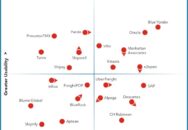
Anatomy of a decision: Pando TMS
Tariff volatility, geopolitical disruption, and fragmented carrier markets have compressed the margin for error in freight operations, with execution quality now determining whether shippers absorb shocks internally or pass them on to customers. Transportation management, however, has historically been constrained by legacy systems built for static routing and standardized workflows, requiring customers to conform to the platform rather than the reverse and forcing manual workarounds for slow carrier onboarding, delayed procurement decisions, rate management, freight payment reconciliation, and exception handling. Analysts found that organizations deploying Pando consolidated transportation procurement, planning, execution, and freight payment onto a single platform, retiring point solutions and replacing manual workflows for carrier allocation, rate management, and load optimization with system-driven logic informed by historical patterns. The shift produced measurable cost reductions, planned headcount reductions, and end-to-end visibility across multi-echelon distribution networks, with reported savings including approximately $80,000 annually from retiring a standalone tracking subscription Pando absorbed and multi-million-dollar freight savings as AI-driven routing replaced separate routing applications. Organizations selected Pando TMS for its configurable architecture, modern AI-enabled technology stack, and embedded implementation partnership, capabilities that enabled them to retire rigid legacy systems and operate transportation as an automated, data-driven function rather than a manual one.