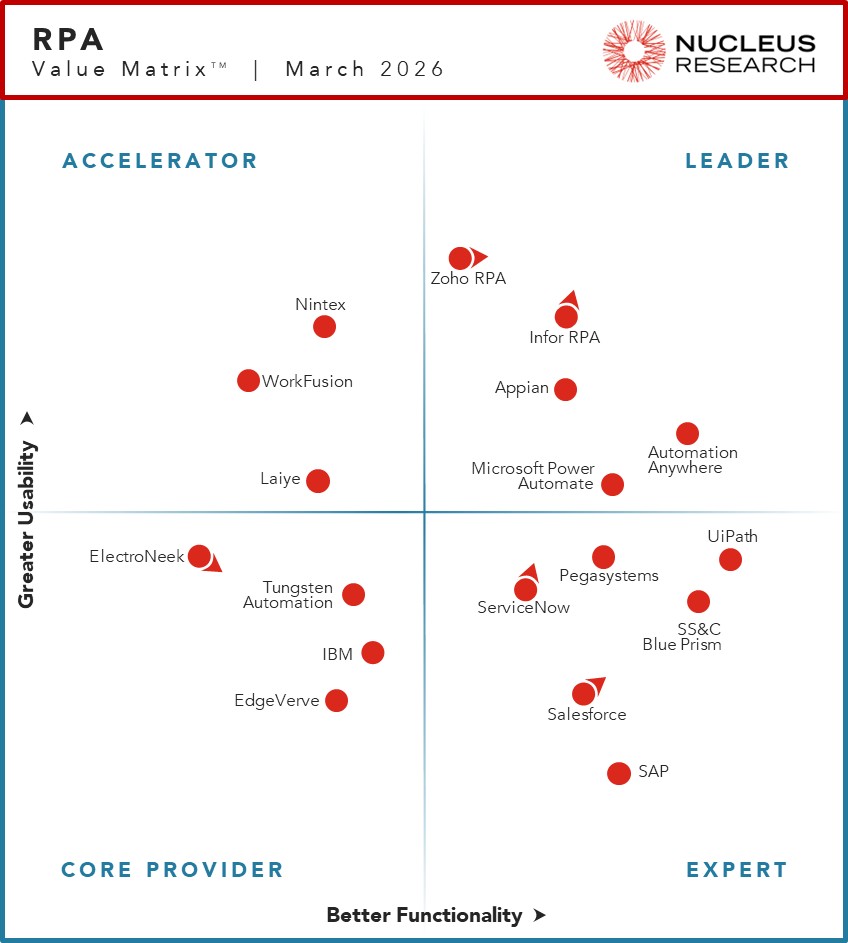
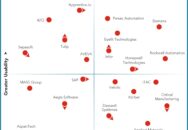
RPA Technology Value Matrix 2026
In 2026, Robotic Process Automation (RPA) platforms are evolving from tools designed to automate repetitive tasks into foundational components of broader intelligent automation strategies. Organizations continue to rely on RPA to reduce costs, improve accuracy, and eliminate manual effort across finance, HR, IT, customer service, and supply chain operations. However, the most significant shift shaping the market is the growing integration of AI agents that extend automation beyond structured workflows. While RPA remains highly effective for high-volume, rules-based processes such as data entry, reconciliation, and system updates, AI capabilities are increasingly layered on top of these workflows to manage exceptions, interpret unstructured data, and support more complex decision-making. This combination enables organizations to move from isolated task automation toward broader process automation. At the same time, enterprises are placing greater scrutiny on automation investments, with stronger expectations for measurable ROI, scalability, and governance. As a result, leading vendors are differentiating through orchestration and interoperability capabilities that coordinate bots, AI agents, systems, and human workers to support sustainable, enterprise-wide automation strategies.